
Plastics and polymer testing machines
One platform for the full polymer QC workflow. Tensile, flexural, compression and impact on Testometric universal testing machines, plus Dynisco melt flow and rheology for process control. ASTM, ISO and BIS compliant, built for Indian compounders, converters and moulders.
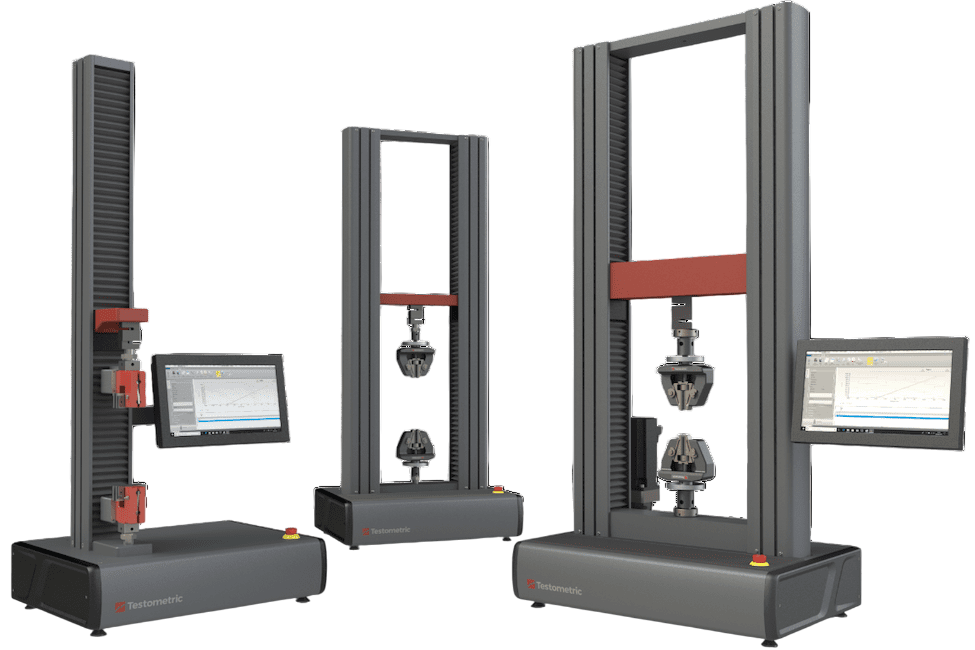
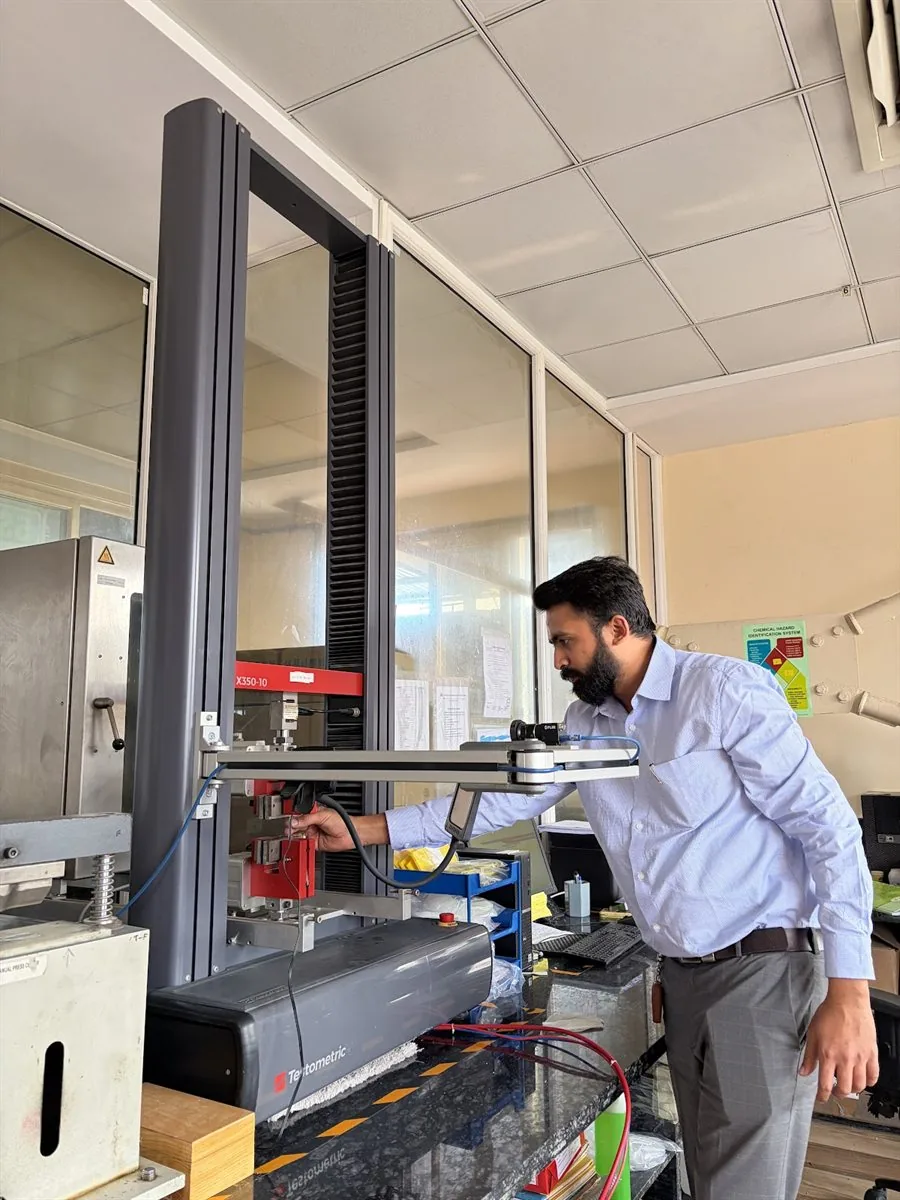
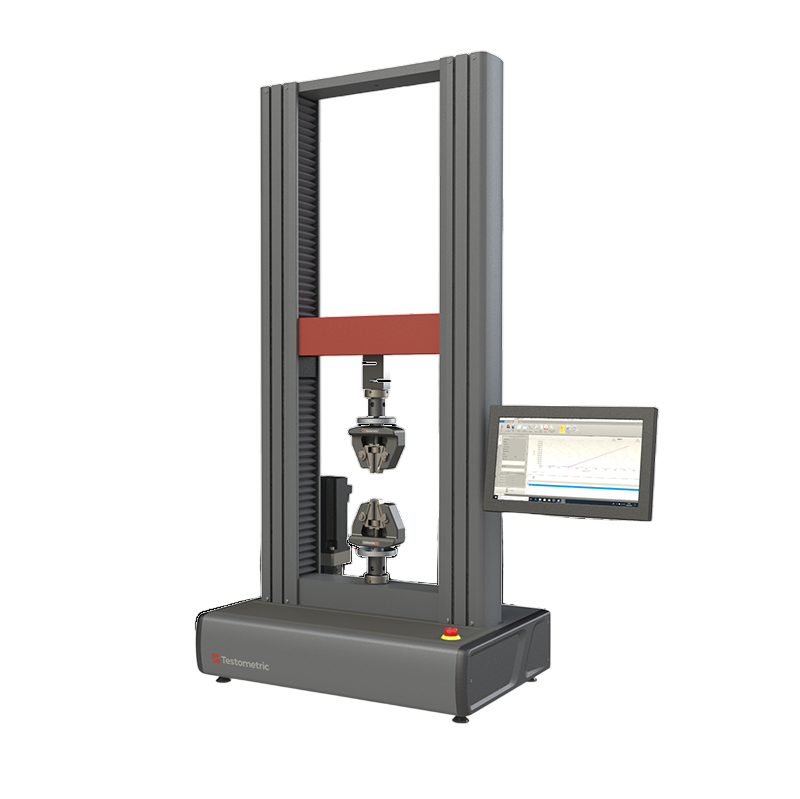
10 kN frame, environmental chamber, video extensometer
A specialised TPE and TPR compound manufacturer needed modulus and elongation data at service temperature, not at ambient. The configuration pairs a 10 kN frame with an environmental chamber and a non-contact video extensometer, because a clip-on device cannot survive the elongation these compounds reach and crosshead travel is not strain.
Customer name withheld. This is a FITCO-supplied and commissioned installation in India.
Mechanical properties and melt behaviour from one supplier
A polymer specification has two halves. Mechanical properties describe the finished part; melt flow describes whether the material will process the same way batch after batch. Labs that buy these separately end up reconciling two vendors' reports, which is why both sit on one supply here.
Full mechanical suite
Tensile, flexural, compression, peel and impact on one Testometric frame, with quick-change grips for dumbbells, bars, films and moulded parts.
Melt flow and rheology
Dynisco melt flow indexers measure MFR and MVR per ASTM D1238 and ISO 1133, with capillary rheometry available for shear-rate and viscosity characterisation.
Standards compliance
Pre-loaded templates for ASTM D638, D790, D695, D256 and D1238, ISO 527, 178 and 1133, plus the BIS IS 13360 equivalents, with audit-ready reporting.
Recyclate and compounding QC
Melt-flow and mechanical data for recyclates, masterbatch and filled compounds, where batch consistency is the whole commercial argument.
Rigid and flexible on one machine
Matching the load cell and grips lets one frame cover glass-filled engineering plastics at high force and thin films at milli-newton sensitivity.
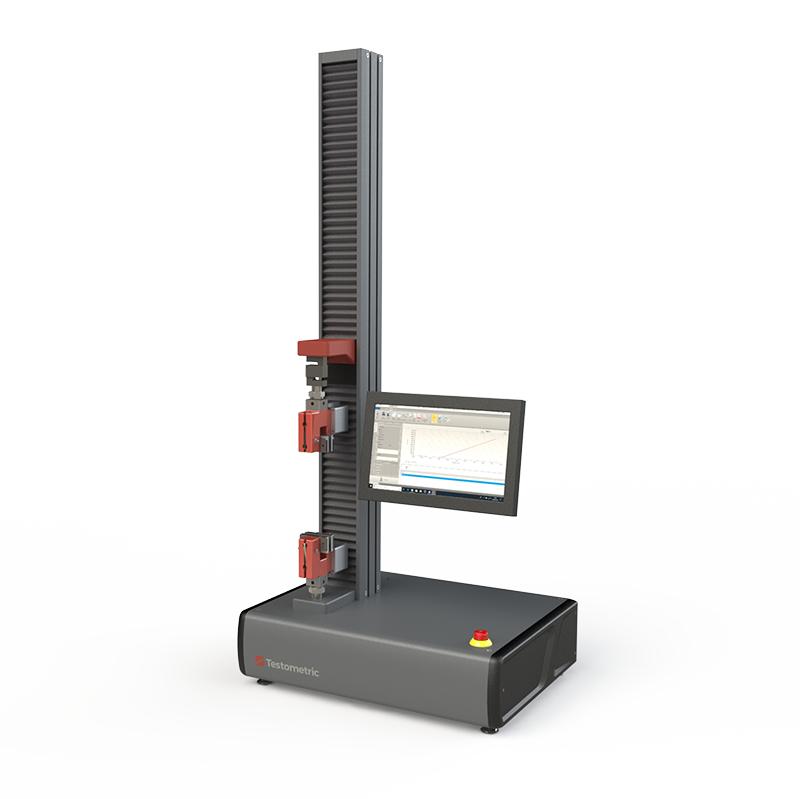
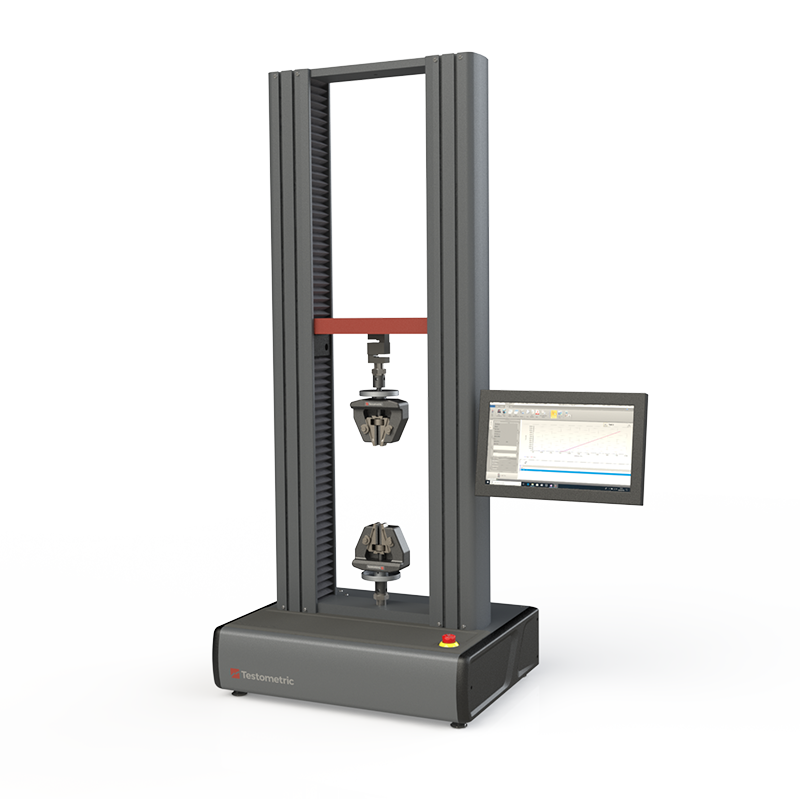
Every polymer and plastic product
Tensile and flexural
Dumbbells and bars to ASTM D638, ISO 527, ASTM D790 and ISO 178.
Compression and impact
ASTM D695 compression, plus notched Izod and Charpy to D256, ISO 180 and ISO 179.
Melt flow and thermal
MFR and MVR to ASTM D1238 and ISO 1133, heat deflection and Vicat to D648 and ISO 75.
Films and sheet
Thin-gauge tensile, elongation and tear with dedicated film grips.
Filled and reinforced
Glass-filled and mineral-filled engineering grades at high force.
Indian BIS methods
IS 13360-4, IS 13360-5, IS 2828 and IS 8543 for domestic and export compliance.
The methods polymer specifications cite
Confirm the method and revision before fixtures are ordered. Specimen geometry, conditioning and test speed all change with the reference, and ASTM and ISO equivalents are not always interchangeable in a customer's document.
Tensile and flexural
Tensile and flexural properties of moulded and extruded polymers.
Compression and impact
Compressive properties and notched impact resistance.
Melt flow and thermal
Flow rate and thermal deflection for process control.
Indian standards
BIS methods for plastics mechanical and flow properties.
Polymer testing questions
Which tests are needed for plastics and polymer quality control?
A complete polymer QC programme typically covers tensile per ASTM D638 or ISO 527, flexural per ASTM D790 or ISO 178, compression per ASTM D695, notched impact per ASTM D256 for Izod and Charpy, melt flow rate per ASTM D1238 or ISO 1133, and heat deflection or Vicat softening per ASTM D648 or ISO 75.
Can one machine test both rigid engineering plastics and flexible films?
Yes. By matching the load cell and grips, a single Testometric universal testing machine tests rigid glass-filled engineering plastics at high force and flexible films at milli-newton sensitivity. winTest Analysis selects the calculation method based on the chosen standard.
Do you support ASTM and Indian BIS standards for plastics?
Yes. The systems run ASTM and ISO methods and the equivalent BIS methods, for example IS 13360 for plastics mechanical and flow properties, with pre-loaded templates and automatic reporting for Indian QC and export compliance.
What is the difference between MFR and MVR on a melt flow indexer?
MFR, melt mass-flow rate, reports mass extruded per 10 minutes in g/10 min. MVR, melt volume-flow rate, reports volume in cm³/10 min. A Dynisco LMI series indexer measures both per ASTM D1238 and ISO 1133, which matters for filled or recycled grades where density varies.
Upgrading a polymer testing lab?
Send the resin, grade, specimen geometry and the standard your customer cites. FITCO will recommend the frame, load cell, grips and melt flow indexer, run your samples before you commit, and support installation, operator training and NABL-traceable calibration.