
X100-TT tissue tensile tester for dry and wet tissue QA.
1kN single-column Testometric system supplied with a 100N load cell, PN1-50FFL pneumatic tissue grips, PF footswitch control and removable FWS50 Finch wet strength fixture for controlled tissue tensile, wet tensile and TEA reporting.
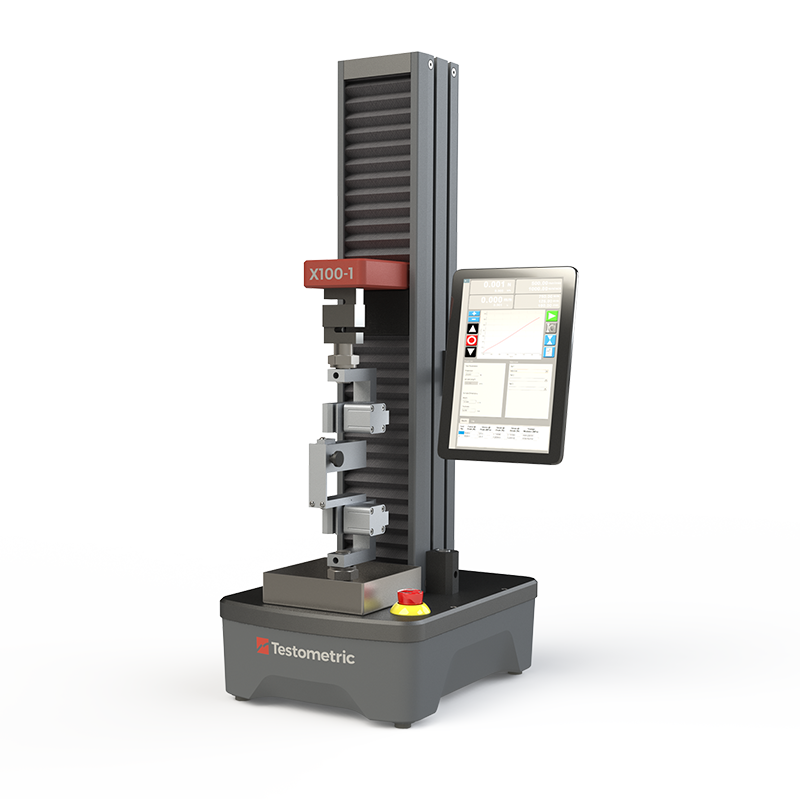
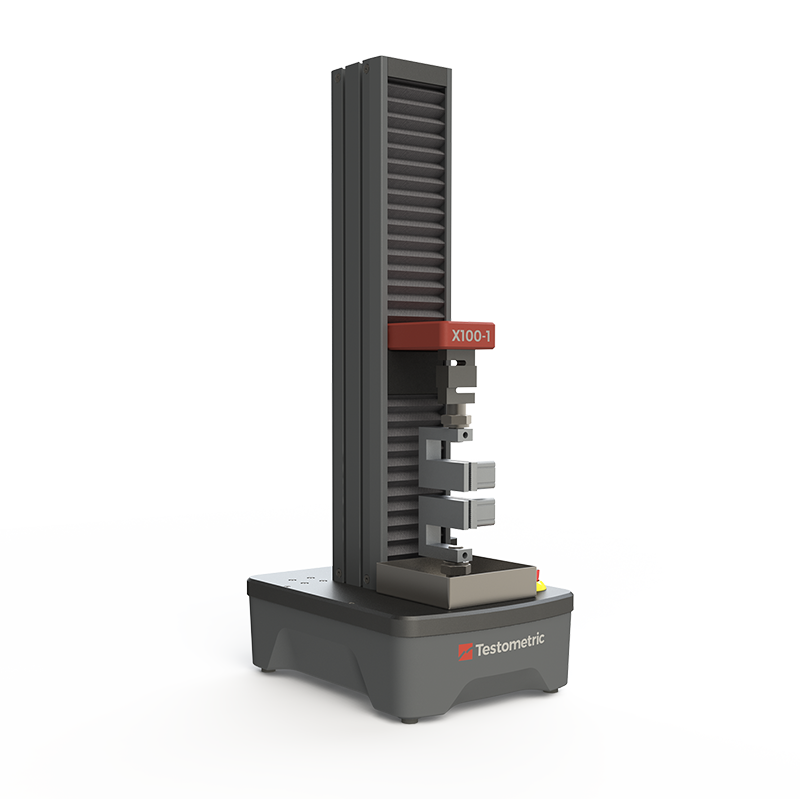

For tissue mills and converters measuring strength, stretch and wet performance.
This is not a generic UTM with random clamps. It is an X100-1 based tissue configuration for low-force strip testing where jaw pressure, wetting method, data rate and repeatable method setup decide whether results are useful.
- Dry tensile strength, stretch at maximum force and tensile energy absorption on bath tissue, facial tissue, napkin, towel and hygiene paper grades.
- Wet tensile strength using the Finch wet strength approach where the specimen is wetted before pull-to-break testing.
- Machine direction and cross direction comparison for converting, embossing, creping, furnish and wet-strength chemistry changes.
- Incoming supplier checks, production release, complaint investigation and R&D method development on low-force tissue samples.
X100-TT technical data to check before approval.
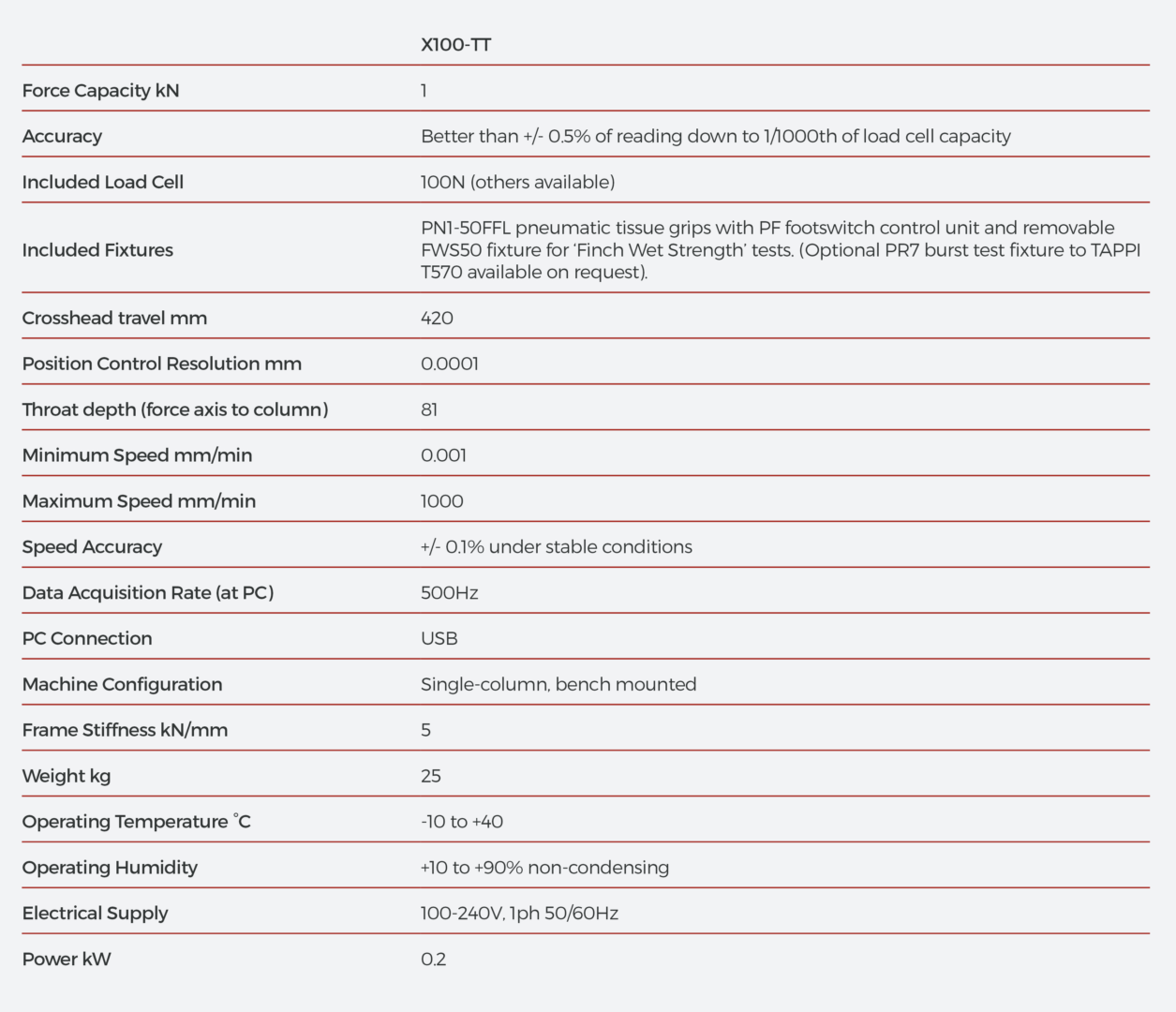
Values below are taken from the X100-TT technical table used for this page. Confirm the final load cell, grip face, test speed and fixture package against your method before ordering.
| Force capacity | 1 kN frame capacity | Included load cell | 100 N included; other load cells available |
|---|---|---|---|
| Accuracy | Better than +/-0.5% of reading down to 1/1000 of load cell capacity | Data acquisition | 500 Hz at PC via USB |
| Included fixtures | PN1-50FFL pneumatic tissue grips, PF footswitch control unit and removable FWS50 Finch wet strength fixture | Optional fixture | PR7 burst test fixture for TAPPI T570 on request |
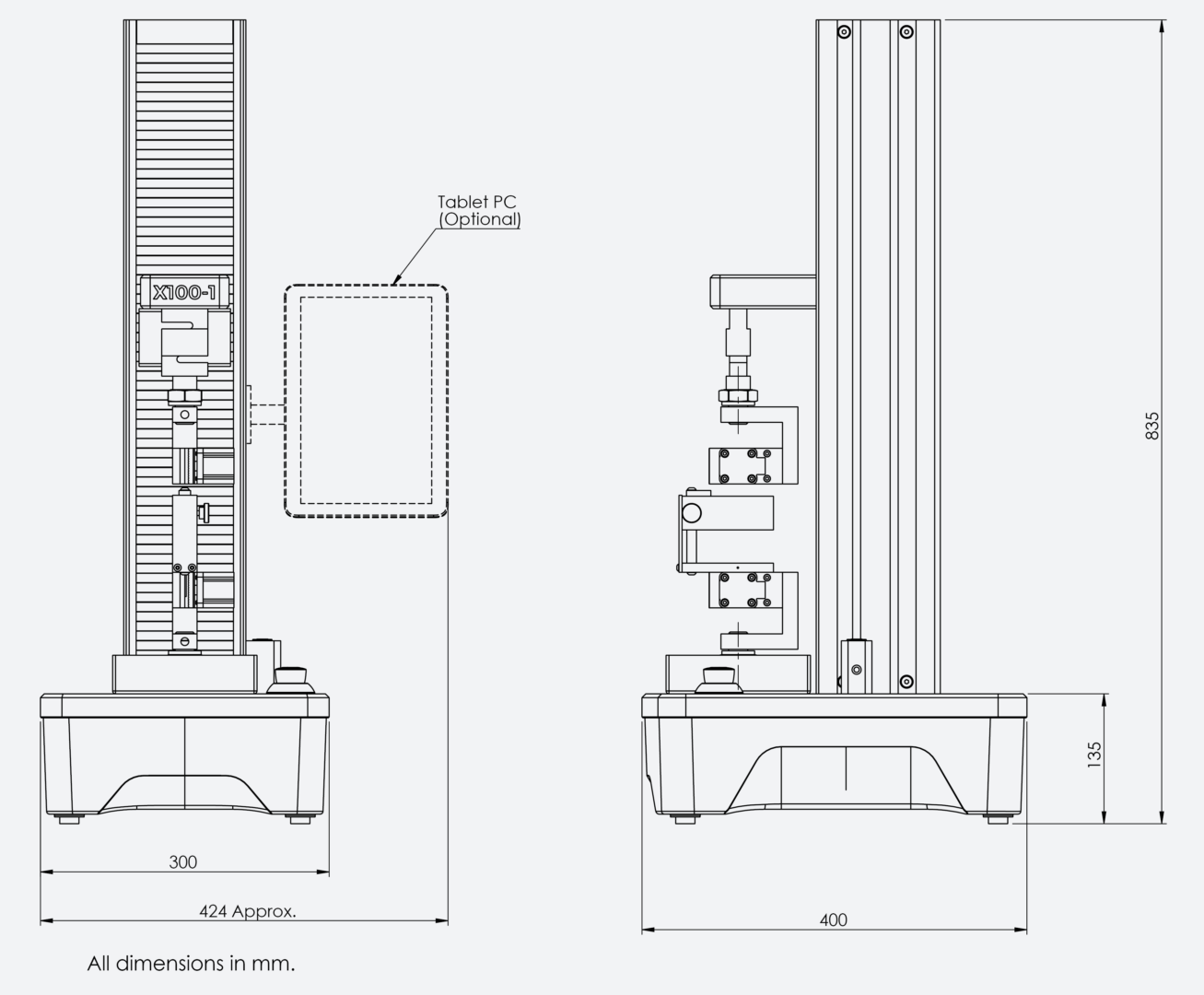
| Crosshead travel | 420 mm | Throat depth | 81 mm from force axis to column |
| Speed range | 0.001 to 1000 mm/min | Speed accuracy | +/-0.1% under stable conditions |
| Position resolution | 0.0001 mm | Frame stiffness | 5 kN/mm |
| Machine format | Single-column bench-mounted system | Weight | 25 kg |
| Environment | -10 to +40 C; 10 to 90% RH non-condensing | Power | 230 V, 1 phase, 50/60 Hz; 115 V option; 0.2 kW |
Relevant tissue and paper standards to map before method sign-off.
The machine does not make a bad method compliant. The standard, sample preparation, conditioning, specimen width, jaw separation, wetting time, test speed and calculation set still need to be defined in your SOP.
ISO 12625-4:2022
Tissue paper and tissue products: tensile strength, stretch at maximum force, tensile energy absorption, tensile index and TEA index using constant-rate-of-elongation tensile apparatus.
ISO 12625-5:2024
Wet tensile strength of tissue paper and tissue products after soaking with water. For vertical tensile testers, the method uses a Finch Cup type wetting device.
TAPPI T581 om-22
Dry tensile strength, peak stretch and tensile energy absorption for paper towel and tissue products using constant-rate-of-elongation apparatus.
TAPPI/ANSI T456 om-22
Wet tensile breaking strength of water-saturated paper and paperboard. Use when your internal or customer specification calls for this paper method.
TAPPI T570 / ISO 12625-11
Ball burst / resistance to mechanical penetration for sanitary tissue. Requires the optional PR7 burst fixture; it is not the same setup as strip tensile testing.
ASTM D828-22
Tensile properties of paper and paperboard using constant-rate-of-elongation equipment. Relevant when tissue-adjacent paper grades or customer documents specify ASTM reporting.
ISO 7500-1 / ASTM E4
Force verification references for static tension/compression testing machines. Use them for calibration control and audit traceability of the force-measuring system.
Note: older Testometric literature references TAPPI T576 for towel and tissue tensile. TAPPI currently lists T576 pm-14 as withdrawn; use your customer specification to confirm whether T581, ISO 12625-4/5 or a legacy method is required.
What a technical user should expect from the test method.
For tissue QA, the value is in repeatable setup and clean reporting, not just peak force. Configure WinTest around the exact property set your buyer or plant uses.
Maximum force, tensile strength, stretch at maximum force, elongation at break and force-extension curve.
Tensile energy absorption and TEA index where the selected method requires area-under-curve reporting.
Wet tensile strength and wet/dry comparison when the method requires water soaking and Finch wet strength fixture use.
Batch statistics, method lock-down, pass/fail limits, graph capture and export for QA records or customer reports.
Decide these items before buying the machine.
These are the questions that change the final fixture, load cell and method setup.
- Dry tensile only, wet tensile only, or both dry and wet method families.
- Sample type: bath tissue, facial tissue, kitchen towel, napkin, hygiene paper, lightweight paper or non-standard product.
- Direction and ply condition: MD/CD, single ply, multi-ply, embossed, laminated, perforated or converted product.
- Expected peak force so the selected load cell operates in a useful measurement range, not near the bottom of capacity.
- Jaw face, grip pressure and specimen handling requirement to prevent slip, premature jaw breaks or crushing of delicate samples.
- Required standard revision, specimen dimensions, gauge length, wetting time, crosshead speed and report units.
Best fit, poor fit, and common mistakes.
Tissue plants, converters, hygiene paper manufacturers, paper QA labs, supplier approval teams and R&D teams needing low-force tensile repeatability.
If your specification requires softness, absorbency, thickness, grammage, linting, perforation strength or ball burst, those need separate methods or additional fixtures/instruments.
Buying only by frame capacity. For tissue, load cell range, grip choice, wetting fixture and method control matter more than headline kN capacity.
Load cell recommendation, tissue grip confirmation, wet strength setup, PR7 burst option if needed, calibration scope and WinTest report template.
Questions buyers ask before specifying this Testometric system.
Use these answers to confirm whether this model, fixture package and WinTest method fit your lab or production workflow before quotation.
What is the X100-TT used for?
Which details should be confirmed before quotation?
Why choose a dedicated tissue tester instead of a general UTM?
Compare adjacent models before final selection.
Many special purpose projects overlap. These related pages help check whether force range, sample envelope, fixture geometry or throughput points to a better fit.
X100-ZDT Z-Direction Paper and Board Tester
A dedicated Testometric Z-direction tensile tester for paper and board internal bond strength workflows.
X100-FT Single Fibre Tensile Tester
A dedicated Testometric fibre tester for low-force tensile testing of individual fibres with pneumatic fibre grips and controlled methods.
X100-COF Coefficient of Friction Tester
A Testometric COF tester for static and dynamic coefficient of friction testing of films, paper, board, coated sheets and packaging surfaces.
Specify the method first. Then choose the X100-TT configuration.
Send the tissue grade, standard, specimen dimensions, expected force range, dry/wet requirement, report units and any customer SOP. FITCO can map the load cell, grips, Finch fixture and optional burst fixture.