Measurable Results. Verified in the Field.
How FITCO clients in geotextiles, polymer processing, and civil infrastructure achieved full compliance, reduced errors, and improved throughput using Testometric UTMs and Dynisco rheometers. Each case study documents real challenges, the equipment deployed, and the outcomes achieved.
Featured Case Studies
Back to Knowledge Centre98% Error Reduction in Geotextile Load Measurement
A leading Indian geotextile manufacturer deployed nine Testometric UTMs across 2.5 kN, 50 kN, and 100 kN configurations. The result: 98% reduction in load measurement errors, full compliance with ASTM D4595, ISO 10319, and BIS 14714, and a 40% increase in R&D productivity.
Dynisco Capillary Rheometer: 95% Defect Reduction
How a multinational polymer manufacturer resolved injection moulding defects and achieved 99.5% batch consistency using Dynisco rheological testing.
U.S. DOT Compliance via Double-Column UTM
An Indian geosynthetics manufacturer supplying U.S. highway projects eliminated 100% of grip slippage and achieved full ASTM D4595, ISO 10319, and AASHTO M288 certification.
Universal Testing Machine (UTM) – Complete Guide
How UTMs work, how to choose force range and frame type, and which Testometric model fits your application.
Testometric UTM Range
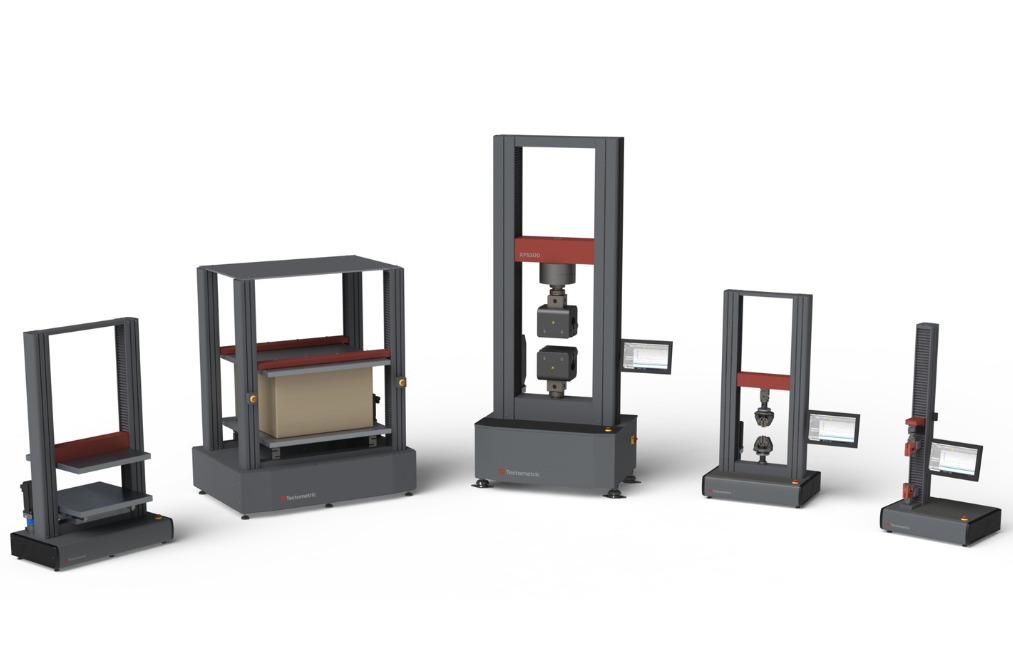
Benchtop, floor-standing, dual-column, and box compression UTMs used across these case studies.
All Case Studies
Results at a Glance
98% Reduction in Load Measurement Errors
High-resolution Testometric load cells eliminated inaccuracies that had threatened international contract certifications for a major Indian geotextile manufacturer.
95% Defect Reduction in Injection Moulding
Dynisco capillary rheometer data identified viscosity instabilities at specific shear rates, enabling precise temperature and pressure corrections before defects reached production.
100% Elimination of Grip Slippage
Hydraulic wedge grips on a Testometric double-column UTM removed the slippage failures that had blocked U.S. DOT and FHWA project certifications.
Facing a similar testing challenge?
FITCO India's application team can assess your current testing setup, identify compliance gaps, and recommend the right Testometric or Dynisco configuration for your material, standards, and throughput requirements.