

FCR-R Online Rheometer
A process-mounted rheometer for extrusion and compounding lines where the lab needs continuous viscosity evidence, extensional property trends, and a way to spot material drift while the melt is still in process.
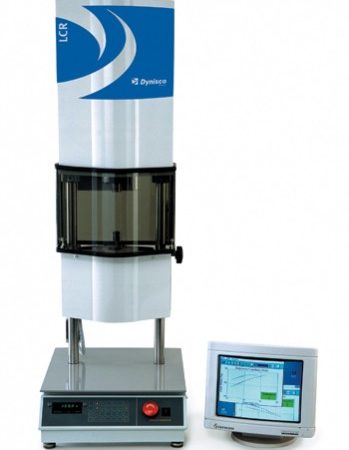
Real-time polymer melt behavior without interrupting production.
The FCR-R is for teams that already care about rheology, MFR correlation, grade change stability, and production quality records. It moves part of that visibility from delayed lab checks to the running line.
Built for production rheology
The dual capillary return-stream design allows rheological measurement without creating a routine waste stream. For a technical team, the value is not only the number on the screen; it is the trend, the deviation from a known-good process window, and the ability to connect that trend to line conditions.
- Measure online apparent viscosities over a broad shear rate range.
- Track polymer extensional properties directly during production.
- Integrate data with plant systems through analog and digital inputs and outputs.
- Support routine operation with simple calibration procedures.
Core FCR-R capabilities
Specification highlights arranged around what a lab, QA, and process engineering team will usually evaluate before committing to an online rheometer.
On-line apparent viscosities over a broad shear rate range.
Unique dual capillary design supports process-friendly sample handling.
Online measurements of polymer extensional properties for deeper process understanding.
Data exchange through analog and digital inputs and outputs.
Designed for straightforward calibration in production environments.
Useful for monitoring polymer melt consistency, process changes, and material transitions.
What your lab and process team should evaluate.
Online rheology works best when the installation, material baseline, and data-use plan are defined before the instrument is selected.
Measurement intent
Define whether the primary use is process trending, grade release support, MFR indication, material transition monitoring, recycled-content control, or troubleshooting unstable extrusion behavior.
- Apparent viscosity trend versus shear condition
- Extensional property behavior during production
- Deviation from a qualified material baseline
Process installation checks
Confirm the physical location and process conditions before quotation. The sensor position should see representative melt, stable temperature, and suitable pressure for repeatable capillary flow.
- Take-off and return path feasibility
- Available space around the extruder or melt line
- Access for cleaning, service, and capillary work
Correlation and calibration
Plan calibration around real production materials, not only generic setup checks. A good startup includes a stable resin grade, lab reference data, and agreed acceptance bands.
- Offline MFR or lab rheometer reference values
- Material-specific temperature dependency review
- Documented calibration and verification interval
Data and control integration
Decide where the measurement will be used: local display, PLC, SCADA, historian, QA reports, or alarms. Analog and digital I/O should be mapped before commissioning.
- Signal list and units required by the plant
- Alarm limits for viscosity or process drift
- Batch, grade, or lot traceability requirements
Information to prepare before selection
From representative melt stream to decision-ready data.
Measure on the running line
Use online sampling so viscosity behavior can be reviewed during production, grade change, or troubleshooting.
Compare against baseline
Trend apparent viscosity and extensional response against qualified material and process references.
Record and respond
Send usable signals to plant systems so QA and process teams can act before off-spec material accumulates.
FCR-R downloads and learning material
Grouped resource links make the page useful for buyers, plant teams, and quality engineers.
Certifications and compliance
- ISO 9001 Certificate
- FCR/FCR-R Declaration of Conformity
- RoHS Declaration of Conformity Available on request from FITCO.
Manuals and articles
Videos
- Dynisco and Sustainability in the Plastics Industry How accurate rheological information helps processors reduce waste.
- Dynisco IoT Cloud Connect: There For You 24/7 When You Can't Be Remote monitoring and production-line support for changing manufacturing conditions.
Webinars and podcast
- How Dynisco is Remolding the Plastics Industry Podcast A discussion about rheology, IoT, cloud solutions, and plastics data.
- Eficiencia en operaciones de extrusion derivada de reologia en tiempo real
- Simplified Rheology for the Masses
- Simplified Rheology: A Technical Discussion
Best-fit applications
Compounding, polymer recycling, resin production, grade transitions, and extrusion lines where viscosity behavior is a critical quality indicator and offline checks arrive too late.
Documents worth requesting
Ask for the manual, conformity documents, installation guidance, I/O details, maintenance expectations, and application-specific discussion before freezing the instrument configuration.
Discuss FCR-R for your extrusion process.
Share the polymer, process temperature range, melt-line connection, target measurement, lab reference method, and plant data requirement. FITCO can help check whether FCR-R is the right online rheology fit.