

Universal Testing Machines for labs where weak force data is expensive.
Testometric gives you more than a capacity number. Federal India Trading Company specifies the frame around position resolution, minimum controllable speed, full-load speed, frame stiffness, test space, load cell range, fixtures, winTest reporting, installation, and calibration route, so the machine fits the test method before the purchase order is released.
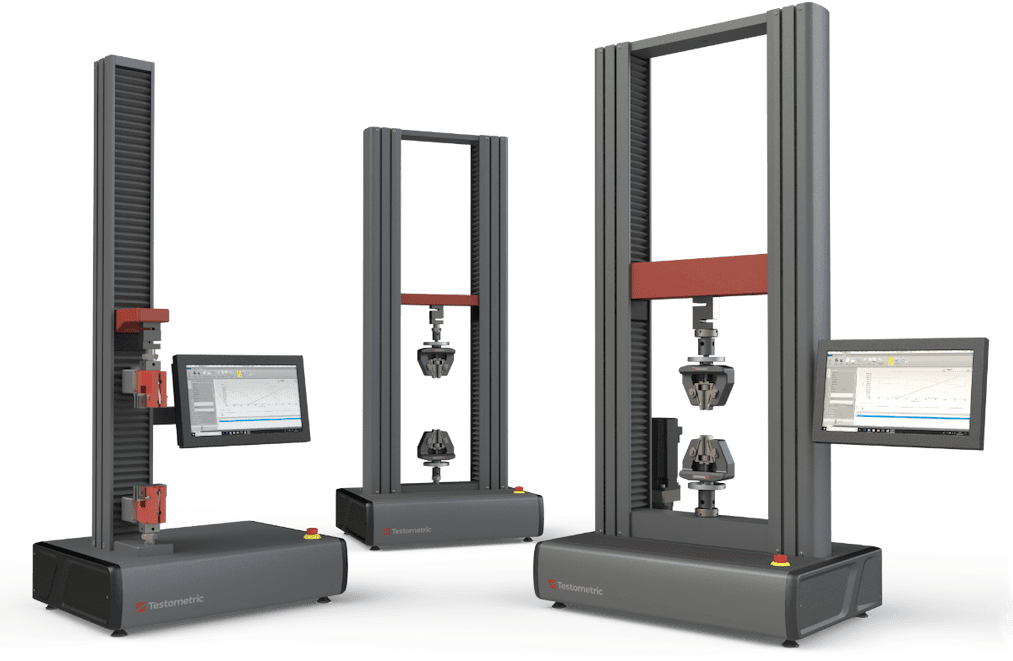
Used where test data has to survive review.
Aerospace, energy, medical, packaging, polymers, textiles, R&D and institutional labs use Testometric where poor data is expensive. The final choice is still application-led; this proof shows the environments these systems work in.
























Shortlist the frame around the curve you need to trust.
A UTM is not bought by maximum capacity alone. Good selection starts with the weakest part of the test: low-force sensitivity, slow extension control, grip behavior, usable travel, stiffness under load, extensometry, report format, and service accountability.
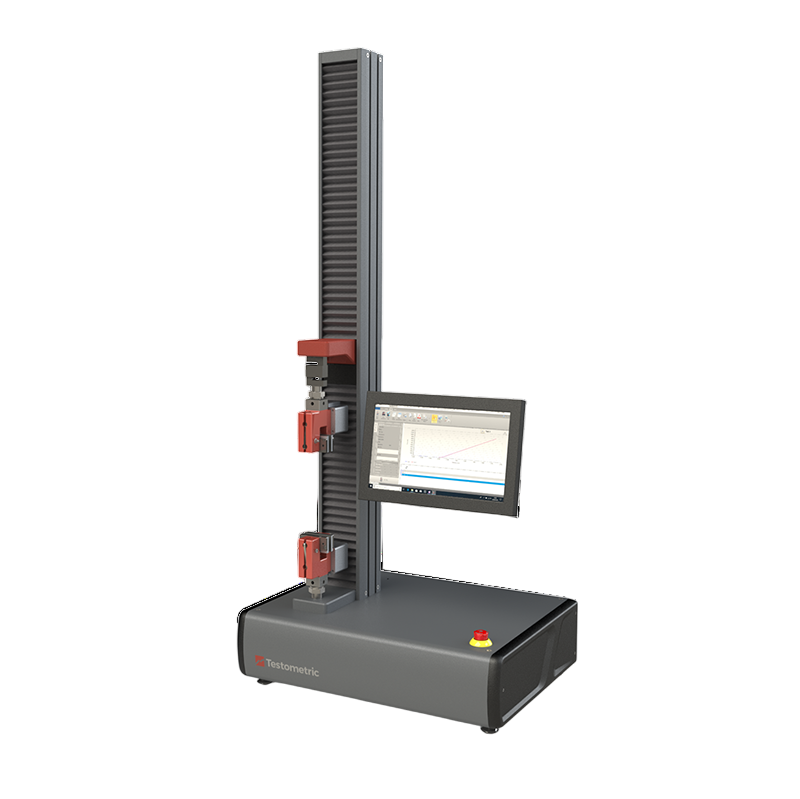
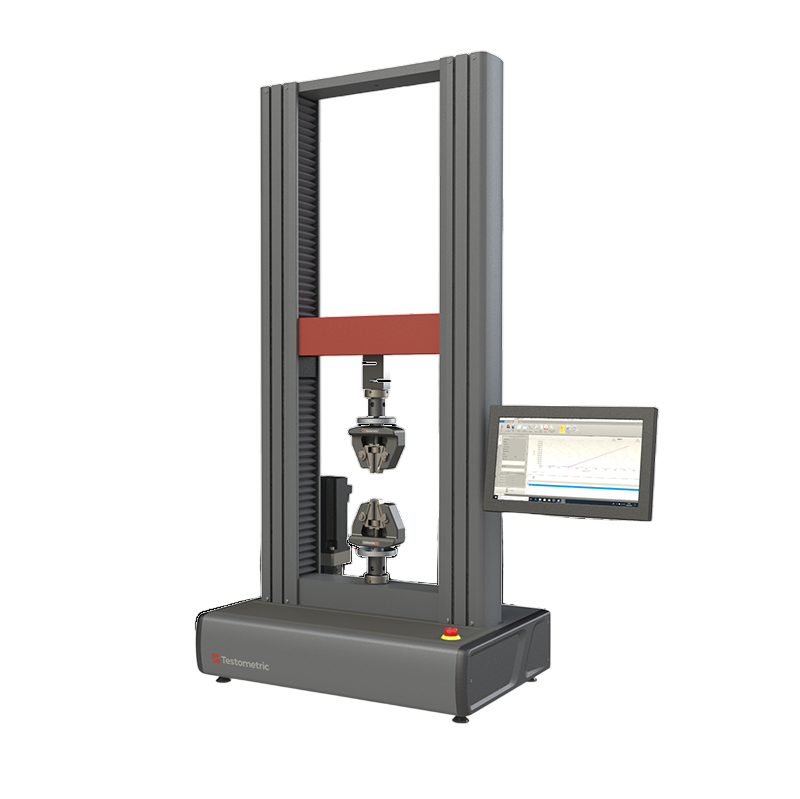
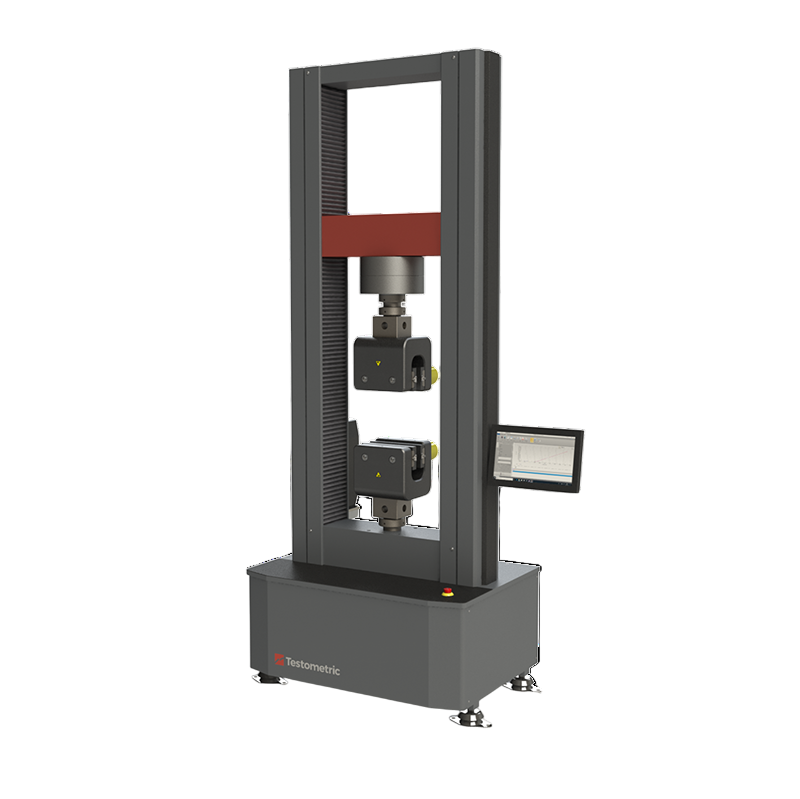
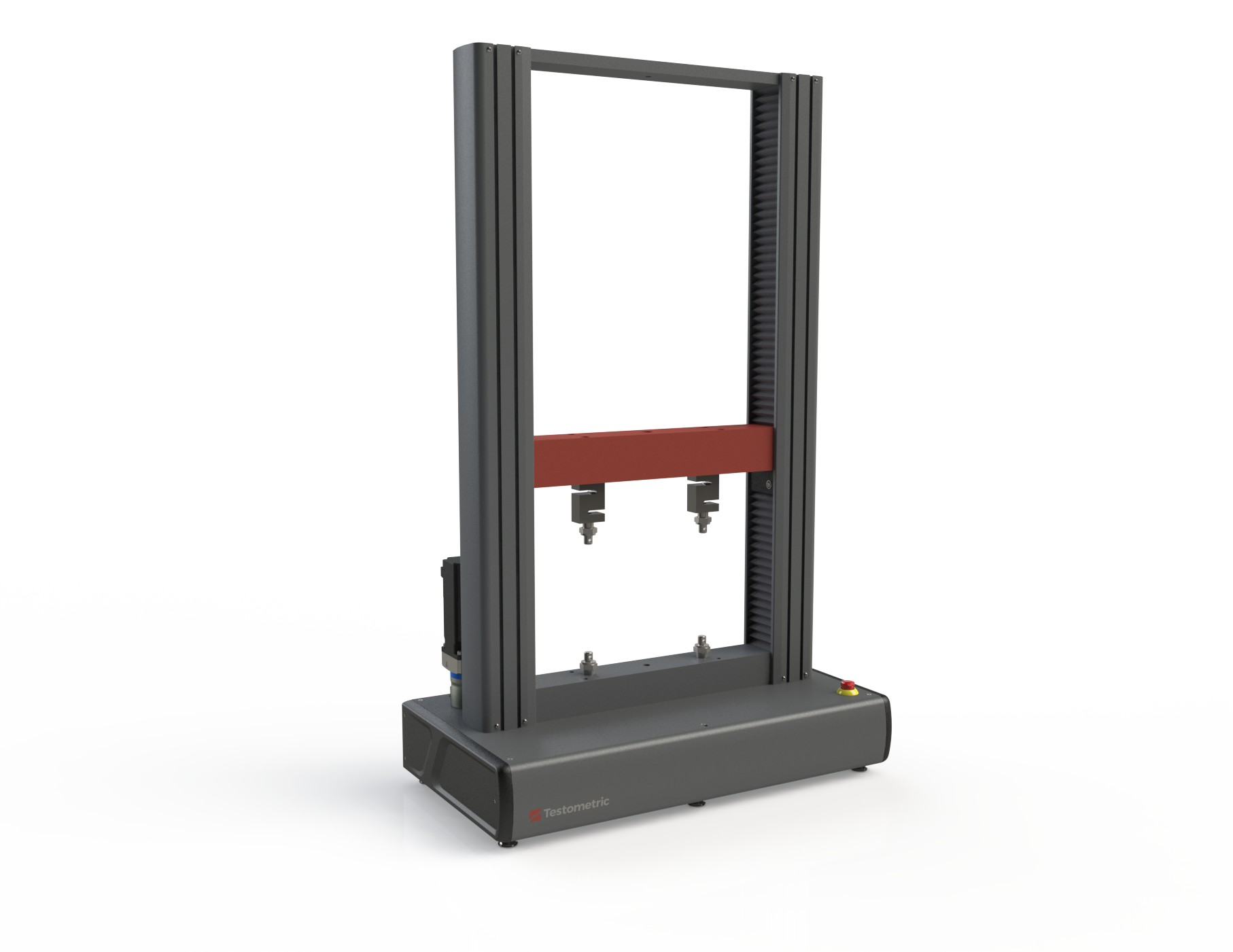
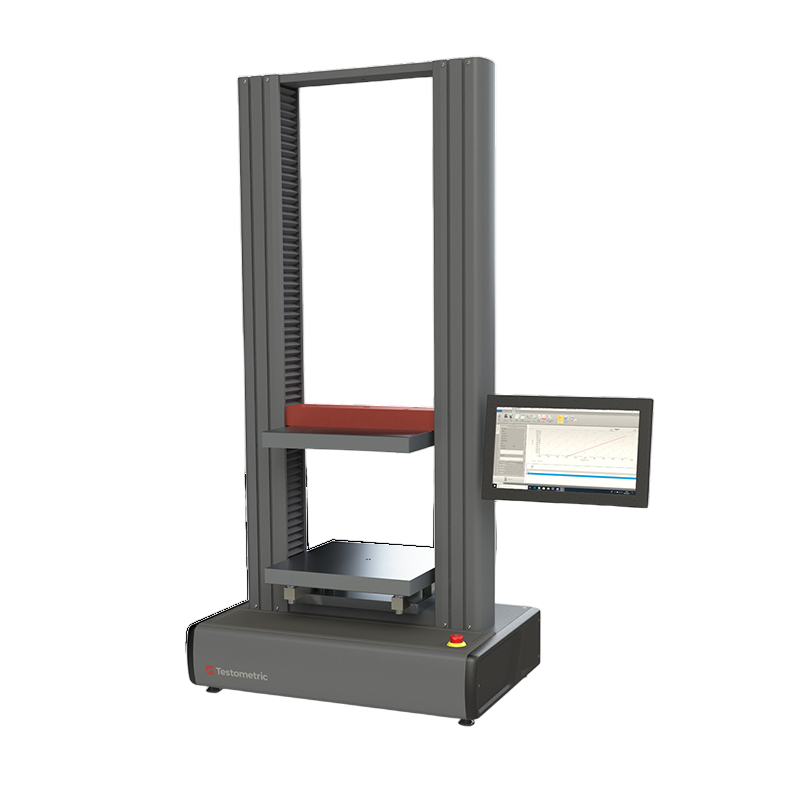
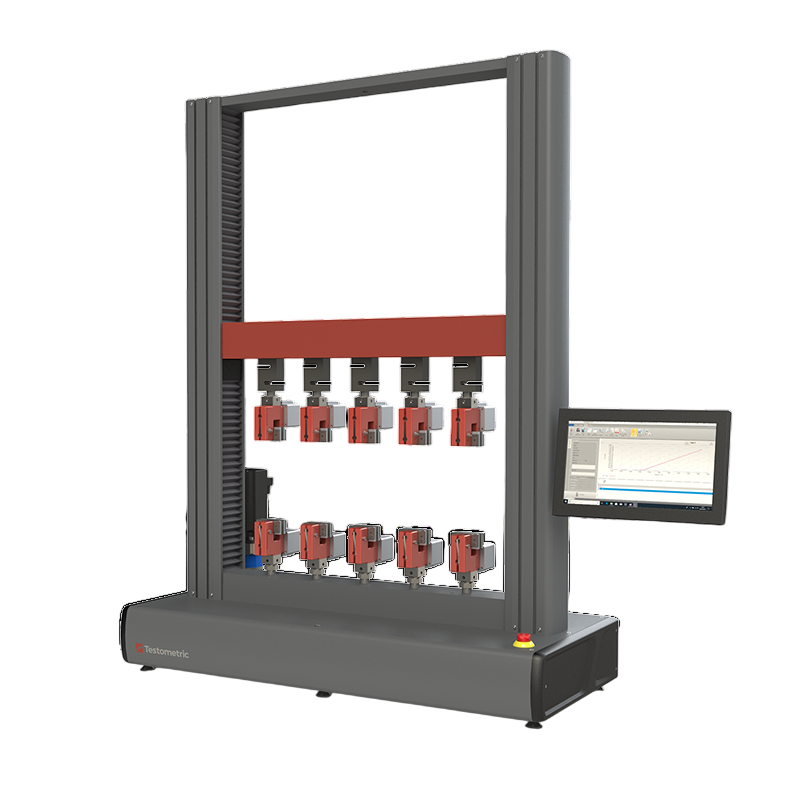
Regulated Lab Configuration
For medical device, pharma packaging, textiles, foils, adhesives, and quality systems where low-force control, audit trail, validation support, and report integrity matter as much as the frame.
Benchtop Universal Testers
For QA and R&D teams testing plastics, textiles, films, elastomers, packaging components, composites, cables, timber, and low-to-medium force assemblies.
Floor Standing Systems
For high-force materials, metals, structural components, geosynthetics, and large samples where frame stiffness and fixture selection are critical.
Dual and Multi-Station Systems
For labs that need repeatable throughput and faster operator flow without compromising method control or fixture setup.
Box Compression Testing
For packaging teams validating cartons, cases, shipping units, stack performance, and compression behavior under defined methods.
Multi-Method Labs
For shared labs switching between tensile, compression, flexure, peel, tear, puncture, and custom fixtures.
The specifications that separate a real UTM from a force gauge on a frame.
These values come from the Testometric series datasheets. They help you compare what actually affects the test curve: motion control, low-force usability, frame deflection, available test space, acquisition speed, machine mass, power, and installation needs.
Resolution protects the beginning of the curve.
For films, foils, elastomers, adhesives, medical components, and low-modulus samples, early extension data can decide modulus, yield, peel behavior, and break detection. A quoted force capacity does not tell you that.
Minimum speed matters when the method is slow.
A 0.00001 mm/min minimum speed gives room for controlled creep, relaxation, peel, puncture, compression, and method development where motion error can change the result before force accuracy becomes the issue.
Frame stiffness decides how much movement is real sample movement.
From 8 kN/mm on X250 to 1300 kN/mm on XFS, stiffness helps separate specimen deformation from machine compliance. That is critical for metals, composites, geogrids, rebar, structural parts, and high-force fixtures.
Travel and vertical space decide whether the fixture will actually fit.
Grips, extensometers, compression platens, flexure rigs, peel fixtures, packaging setups, and long samples consume space quickly. This is why FITCO checks crosshead travel and vertical daylight before recommending the model.
X100 Compact
Best when the sample is small, the force is low, and the lab needs a compact machine for films, fibres, medical components, and micro-specimens.
- Models
- X100-1, X100-1LT
- Force
- 1 kN
- Resolution
- 0.0001 mm
- Speed
- 0.001-1000 mm/min
- Travel / vertical
- 420/600 mm or 650/830 mm
- Stiffness / weight
- 5 kN/mm, 24-26 kg
X250 Light-Duty
The strongest low-force story on the page: 0.000001 mm resolution, 0.00001 mm/min minimum speed, and 2500 mm/min maximum speed for textiles, foils, packaging, adhesives, and medical QA.
- Models
- X250-1, X250-2.5, X250-3
- Force
- 1, 2.5 and 3 kN
- Resolution
- 0.000001 mm
- Speed
- 0.00001-2500 mm/min
- Travel / vertical
- 630/800 mm or 990/1160 mm
- Stiffness / weight
- 8 kN/mm, 73-80 kg
X350 Medium-Duty
The practical middle ground for plastics, composites, rubber, cables, timber, and assemblies: twin-column stability, 1100 mm travel, 1275 mm vertical space, and 60 kN/mm stiffness.
- Models
- X350-5, X350-10, X350-20
- Force
- 5, 10 and 20 kN
- Resolution
- 0.000001 mm
- Speed
- 0.00001-2000 mm/min, 1000 mm/min on 20 kN
- Travel / vertical
- 1100/1275 mm
- Stiffness / weight
- 60 kN/mm, 110-120 kg
X500 Heavy-Duty Bench
For higher-force bench work where the fixture is serious: 25-100 kN capacity, 420 mm column spacing, 120-400 kN/mm stiffness, and up to 1300 mm vertical space.
- Models
- X500-25, X500-30, X500-50, X500-100
- Force
- 25, 30, 50 and 100 kN
- Resolution
- 0.000001 mm
- Speed
- 0.00001-1000 mm/min, 500 mm/min on 100 kN
- Vertical space
- 1150-1300 mm
- Stiffness / weight
- 120-400 kN/mm, 155-235 kg
XFS Floor Standing
For industrial tests where mass and stiffness are part of the measurement system: 100-1000 kN, up to 1300 kN/mm stiffness, and 750-2000 kg machine mass.
- Models
- XFS100, XFS150, XFS300, XFS500, XFS600, XFS1000
- Force
- 100-1000 kN
- Resolution
- 0.00001 mm
- Speed
- 0.00001-600 mm/min, 300 mm/min on 1000 kN
- Travel / vertical
- 1100-1300 / 1400-1600 mm
- Stiffness / weight
- 500-1300 kN/mm, 750-2000 kg
The questions a serious UTM buyer should ask before price negotiation.
A premium UTM purchase is not won by brochure capacity. It is won by clean data, correct load cell sizing, fixture fit, method control, software usability, calibration confidence, and service accountability after installation.
winTest is part of the system, not a side conversation.
Software is where many UTM purchases become expensive after the PO. Confirm method control, reporting, user access, validation, and export needs before final configuration.
Built for lab operators and quality reviewers.
winTest manages method setup, calculations, charts, reports, exports, access levels, and optional regulated workflows. The practical benefit is simple: fewer disconnected tools between the test and the approved result.
300+ method templates
Useful when the lab runs repeatable ASTM, ISO, EN, DIN, or internal methods.
Role-based control
Operator, engineer, and administrator permissions support locked methods and reviewable workflows.
Review and export flexibility
Data can be reviewed, reported, exported, and shared without building a separate workflow around the machine.
The machine is only part of the purchase.
Installation, training, calibration, fixtures, application support, and spare-part coordination decide whether the system stays productive after commissioning.
Site readiness and installation
Pre-installation review, commissioning, method checks, and operator handover at your facility.
Commissioning supportOperator training
Training around your sample, fixture set, software workflow, report output, and routine maintenance.
Application-led onboardingCalibration route
NABL-traceable force verification aligned with ISO 7500-1 and ASTM E4 where required by the quality system.
Audit-ready recordsService accountability
Application help, remote diagnostics, spare parts coordination, and service support through Federal India Trading Company.
India support layerUse this table to start the shortlist, not finish it.
Final selection still needs sample geometry, grip behavior, extensometry, speed, software, and calibration requirements.
| Specification | X100 | X250 | X350 | X500 | XFS |
|---|---|---|---|---|---|
| Force capacity | 1 kN | 1-3 kN | 5-20 kN | 25-100 kN | 100-1000 kN |
| Position resolution | 0.0001 mm | 0.000001 mm | 0.000001 mm | 0.000001 mm | 0.00001 mm |
| Minimum speed | 0.001 mm/min | 0.00001 mm/min | 0.00001 mm/min | 0.00001 mm/min | 0.00001 mm/min |
| Maximum speed | 1000 mm/min | 2500 mm/min | 2000 mm/min, 1000 on 20 kN | 1000 mm/min, 500 on 100 kN | 600 mm/min, 300 on 1000 kN |
| Accuracy statement | Better than +/-0.5% of reading down to 1/1000th load cell capacity | Better than +/-0.5% of reading down to 1/1000th load cell capacity | Better than +/-0.5% of reading down to 1/1000th load cell capacity | Better than +/-0.5% of reading down to 1/1000th load cell capacity | Better than +/-0.5% of reading down to 1/1000th load cell capacity |
| Data acquisition | 500 Hz | 500 Hz standard, optional 1000 Hz | 500 Hz standard, optional 1000 Hz | 500 Hz standard, optional 1000 Hz | 500 Hz standard, optional 1000 Hz |
| Crosshead travel | 420 or 650 mm | 630 or 990 mm | 1100 mm | 950-1075 mm | 1100-1300 mm |
| Vertical space | 600 or 830 mm | 800 or 1160 mm | 1275 mm | 1150-1300 mm | 1400-1600 mm |
| Frame stiffness | 5 kN/mm | 8 kN/mm | 60 kN/mm | 120-400 kN/mm | 500-1300 kN/mm |
| PC connection | USB | Ethernet or USB adaptor | Ethernet or USB adaptor | Ethernet or USB adaptor | Ethernet or USB adaptor |
| Machine mass | 24-26 kg | 73-80 kg | 110-120 kg | 155-235 kg | 750-2000 kg |
| Electrical / power | 100-240V, 0.2 kW | 230V, 0.3 kW | 230V, 0.45 kW | 115/230V, 1-1.2 kW | 3 phase 380/400V, 2.2-4.5 kW |
| Typical use | Micro-specimens, films, fibres, medical | Textiles, foils, packaging, adhesives | Plastics, composites, cables, timber | Metals, aerospace, construction | Steel, rebar, geogrids, heavy structures |
Send the sample, peak force, fixture, and standard before asking for price.
Federal India Trading Company will help narrow the frame, load cell, fixture set, winTest workflow, installation scope, and calibration route so the quotation is tied to the real test method.
Questions serious buyers ask before sign-off.
Short answers on model selection, compliance workflows, support in India, and total configuration risk.