
Systech 7101 WVTR Testing: Key Technical Points for Films, Blisters, and Packages
WVTR data is only useful when sample format, relative humidity, temperature, masking condition, and reporting units are defined correctly. The Systech AquaSense 7101 is a P2O5 coulometric WVTR system used for films and complete packages, with automatic humidity and temperature control plus a published wide-range configuration for high-barrier and higher-transmission materials.


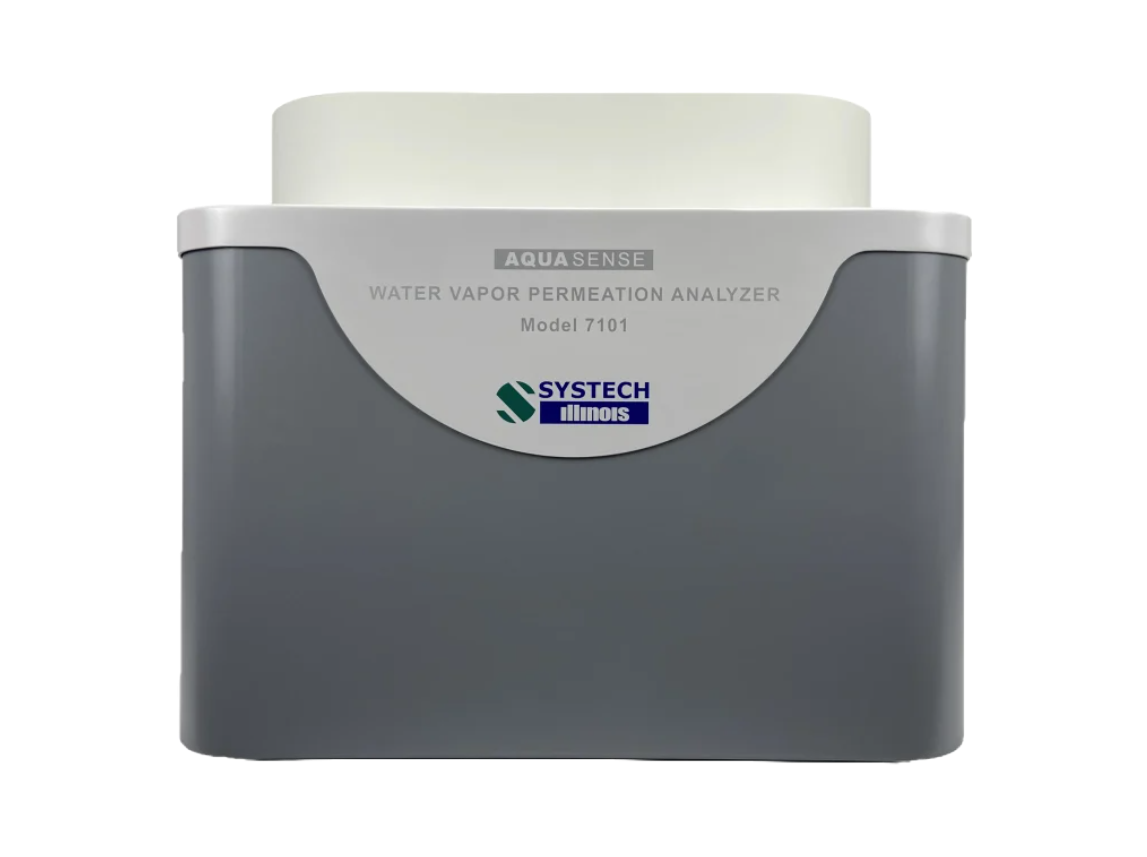
Published 7101 ranges depend on whether the test is run masked or unmasked and whether the test article is film or a finished package. That configuration detail should be locked before quoting performance.
Why WVTR testing matters
Start with humidity, sample format, and reporting units
A WVTR result without RH, temperature, sample format, masking condition, and reporting units is incomplete. The method context is part of the result.
What to define before selecting a WVTR setup
The main issue is not simply measuring moisture transmission. It is matching fixture, range, humidity control, and reporting units to the actual barrier question the lab needs answered.
Sample geometry
Flat film, coated paper, blister cavities, and complete packages do not use the same sample preparation or report format.
Expected WVTR range
Metallized or coated high-barrier films and breathable structures sit at very different parts of the measurable range.
RH and temperature control
For shelf-life simulation and comparative material work, controlled conditions are more useful than ambient lab testing.
Sensor protection
Very wet or abnormal samples can shorten sensor life if the system is not designed with surge protection and robust stop logic.
Data and compliance requirements
Regulated packaging and formal QA workflows may require stored methods, searchable records, validation, and optional 21 CFR Part 11 controls.
Method and standards context
What the 7101 actually provides
Relevant capabilities, not product-page filler
The strongest technical points in the available 7101 source material are the P2O5 coulometric sensor, wide masked and unmasked WVTR range, controlled RH and temperature, and workflow features built for repeatable barrier testing rather than one-off screening.
1. Wide WVTR range across masked and unmasked film configurations
Published ranges in the local product sheet span from 0.002 g/(m².day) at the low end up to 1,000 g/(m².day) in extended masked testing, with separate normal and extended configurations.
- Normal unmasked: 0.002 to 10 g/(m².day)
- Normal masked: 0.02 to 70 g/(m².day)
- Extended masked: up to 1,000 g/(m².day)
2. Package capability and low-end sensitivity
The same source set shows complete-package WVTR capability beginning at 0.00001 g/(pack.day), which is relevant for blister packs and other finished formats where package-level reporting matters more than flat-film conversion.
- Supports film and package workflows on one platform
- Useful where package geometry changes barrier interpretation
- Helps separate material screening from finished-pack validation
3. Controlled RH, automatic stop logic, and sensor protection
The 7101 literature references 20 to 90% RH control, 10 to 40 C temperature control, Test Condition Matrix programming for up to ten conditions, anti-surge protection, and Auto-Stop at equilibrium.
- Reduces dependence on one ambient-condition result
- Protects the sensor from abnormal moisture load
- Improves repeatability between operators and shifts
Software, validation, and throughput
4. Absolute P2O5 measurement
Published positioning for the 7101 emphasizes absolute moisture measurement with no routine calibration requirement, unlike infrared-based alternatives.
5. Validation and records
NIST-traceable validation, live graphing, stored parameters, data search, and diagnostics support QA review and formal method control.
6. Scale-up and regulated workflows
Optional 21 CFR Part 11 software and satellite expansion up to 32 cells are relevant where labs need both traceability and higher throughput.
Where the 7101 fits best
The 7101 is strongest in labs that need controlled-humidity WVTR work across multiple packaging formats, especially where low-end sensitivity, traceable validation, and method consistency matter.
Flexible packaging films
WVTR testing for BOPP, PET, PE, coated films, laminates, and metallized structures using area-based reporting.
Pharmaceutical blister packs
Package-level work for blister formats, strip packs, and moisture-sensitive drug packaging where RH control and records matter.
High-barrier coatings and new materials
Development work on coated films, sustainable barriers, and specialty packaging structures where small WVTR differences matter.
QC, scale-up, and supplier qualification
Repeatable WVTR release work using stored methods, controlled conditions, and optional higher-throughput cell expansion.
What a useful WVTR report should include
In summary
The AquaSense 7101 is most relevant when the lab needs controlled-humidity WVTR data across films, blister packs, and complete packages using a P2O5 coulometric platform. The real selection criteria are sample format, required range, RH and temperature control, reporting units, and the level of validation or documentation the workflow requires.
Need to match a sample to the correct WVTR method?
FITCO India can review sample geometry, reporting units, humidity conditions, and whether the 7101 is the right setup for your film or package workflow.