
Systech 8101e OTR Testing: Key Technical Points for Films, Packages, and PET Bottles
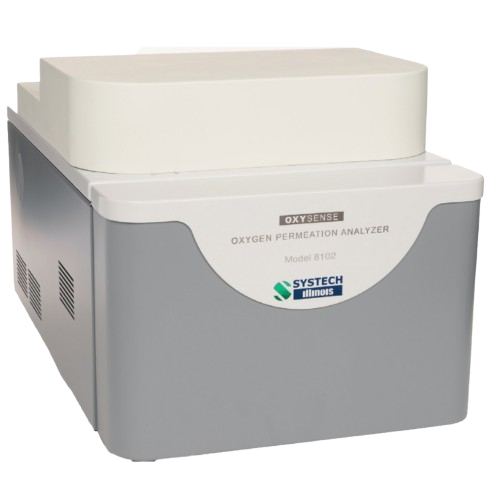
OTR data is only useful when the sample format, reporting units, conditioning, and test method are defined correctly. The Systech Illinois OxySense 8101e is a coulometric oxygen permeation system used for films, packages, containers, and PET bottles, with automatic temperature and RH control plus a wide published measurement range.


Why OTR testing matters
Start with sample format, units, and test conditions
A useful OTR result should always be read with its sample geometry, test standard, temperature, RH, and reporting units. A standalone number is rarely enough.
What to define before selecting an OTR setup
For most labs, the main problem is not getting a number. It is matching the method, fixture, and reporting units to the sample geometry and expected transmission range.
Sample format and units
Film, sheet, package, bottle, and container work do not use the same fixtures or always report in the same units.
Expected transmission range
High-barrier and high-transmission samples put very different demands on sensitivity, test duration, and sensor range.
Temperature and RH control
If oxygen barrier changes with humidity or storage temperature, controlled conditioning is more useful than room-condition testing.
Abnormal sample handling
Pinholes, leaking seals, or unexpectedly high oxygen flow can overload a sensor or invalidate the test if the system is not protected.
Data integrity requirements
Regulated or audited environments may need saved methods, traceable verification, audit trail features, and controlled user access.
Method and standards context
What the 8101e actually provides
Relevant capabilities, not brochure language
Source material in this workspace points to a wide-range eMetric coulometric sensor, automatic temperature and RH control, and software features aimed at repeatable permeation work rather than simple pass/fail screening.
1. Wide coulometric measurement range
Workspace extracts for the 8101e list 0.05 to 432,000 cc/(m²·day) for film-style reporting and 0.00025 to 2,000 cc/(pkg·day) for package reporting, with 0.001 cc/(m²·day) resolution.
- Covers both low-barrier and high-transmission work
- Supports area-based and package-based reporting, depending on fixture
- Useful when one lab handles films, containers, and finished packs
2. Controlled temperature and RH programs
The published literature references automatic temperature and relative humidity control across up to ten programmed conditions, which is important when barrier performance shifts with environment.
- Avoids relying on one ambient-condition result
- Supports comparison across defined T/RH points
- Useful for material screening and design validation
3. Sensor protection and stop logic
The 8101e feature set includes oxygen surge protection and Auto-Stop at equilibrium. These are practical controls for leaking, pinned, or unexpectedly high-transmission samples.
- Helps protect the sensor from abnormal oxygen load
- Ends tests at equilibrium instead of operator guesswork
- Improves repeatability between users and shifts
Software and documentation
4. Traceable verification
FITCO source material references NIST-traceable validation, which is important when low OTR values need to be defended during QA review or external audit.
5. Data handling
Published software features include live graphing, stored methods, searchable data, and diagnostics rather than only end-of-test numeric output.
6. Regulated workflows
Optional 21 CFR Part 11 software is relevant for pharma and medical packaging environments that require controlled access, electronic records, and auditability.
Where the 8101e fits best
The strongest fit is in labs that run oxygen barrier work across more than one sample type and need controlled conditions, traceable data, and a wide usable range.
Barrier films and multilayers
Flat-sheet OTR work for polymer films, coated structures, and multilayer materials using area-based reporting.
Packages and containers
Finished package or container studies where geometry matters and package-based units are more useful than film-only values.
PET bottles and rigid formats
Bottle and rigid-container oxygen transmission work where low OTR and repeatable fixturing matter.
R&D and QC transfer
Method development, comparative screening, and production release work using saved conditions and repeatable stop criteria.
What a useful OTR report should include
In summary
The 8101e is most relevant when the lab needs coulometric OTR data across films, packages, containers, or PET bottles with controlled temperature and RH plus traceable verification. The real selection criteria are sample format, reporting units, applicable standard, expected range, and software or documentation requirements.
Need to match a sample to the correct OTR method?
FITCO India can help review sample geometry, applicable standard, reporting units, and whether the 8101e is the right platform for the work.