
Geosynthetics Testing Machines
World-leading, best-in-class high-capacity UTM systems engineered for wide-width tensile, CBR puncture, seam strength, and in-plane drainage testing. Trusted globally and utilized by premier testing authorities including TRI BTTG, BTTG Poland, and GTSPL Lab Ahmedabad. Fully compliant with ASTM D4595, ASTM D6637, ISO 10319, and EN ISO 12236.
Trusted by World-Leading Testing Labs & Producers
Recognized as the industry standard, Testometric systems are utilized by leading global authorities including TRI BTTG, BTTG Poland, and GTSPL Lab Ahmedabad to deliver the highest precision and compliance.




High-Capacity Systems for Geosynthetics Testing
Engineered for the high-force and large-specimen demands of geotextile and geogrid testing, with hydraulic grips and video extensometers for wide-width specimens.
Load Capacity
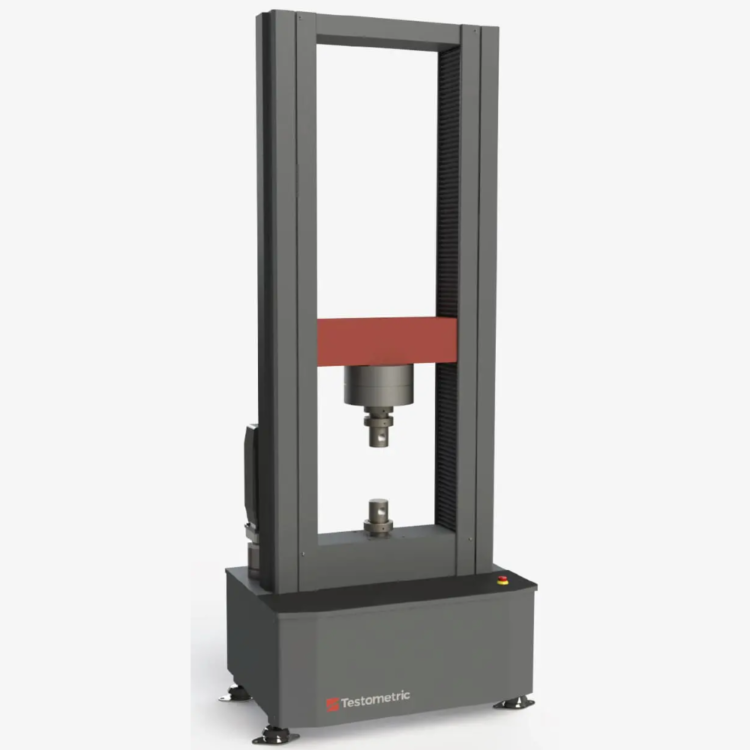
Testometric XFS heavy-duty floor-standing frames from 100 kN to 1000 kN for high-strength geogrids and textiles.
Frame Size
Accommodates wide-width specimens and high-elongation materials.
Grip Type
Powerful grips to securely hold wide specimens without slippage.
Strain Measurement
Non-contact, high-accuracy strain measurement for extensible materials.
Key Features & Advanced Capabilities
Purpose-built technology for accurate and repeatable geosynthetic material testing — from bench-top QC to 1000 kN structural qualification.
Wide-Width Specimen Testing
Extra-wide frames and grips to test specimens up to 200mm wide, fully compliant with ASTM D4595.
High-Force Hydraulic Grips
Powerful, self-aligning hydraulic grips ensure consistent clamping pressure, preventing slippage during high-load tests.
Non-Contact Video Extensometers
Accurately measure strain without touching the specimen, ideal for materials that are highly extensible or prone to damage from traditional extensometers.
Comprehensive Standards Library
winTest Analysis software pre-loaded with test methods for ASTM D4595, ISO 10319, and other key geosynthetic standards.
Puncture and Tear Fixtures
Specialized fixtures for determining puncture resistance (ASTM D6241) and trapezoid tear strength (ASTM D4533).
In-Situ Condition Simulation
Test materials under simulated soil confinement and other loading conditions for a complete performance picture.
Multi-Material Testing
Handles geotextiles, geogrids, geocomposites, and geomembranes with quick fixture changeovers for different material types.
Environmental Chambers
Optional environmental chambers covering sub-zero to +300°C for temperature-conditioned tests that reflect real field performance.
Standards Compliance
Meeting all major international standards for geosynthetic material validation.
Tensile & Elongation
- ASTM D4595Wide-Width Strip Method
- ASTM D6637Geogrid Tensile Properties
- ISO 10319Geosynthetic Tensile Properties
Tear & Puncture Resistance
- ASTM D4533Trapezoid Tearing Strength
- ASTM D6241Static Puncture Strength
- ISO 12236Static Puncture Test (CBR)
Seam & Interaction
- ASTM D4884Strength of Seams
- ASTM D5321Direct Shear Testing
- ASTM D7499Pullout Resistance of Geogrids
Environmental & Durability
- ASTM D5596UV Degradation Testing
- ASTM D4355Deterioration by Exposure
- ISO 12956Determination of Water Flow
Testing for Every Geosynthetic Application
Road reinforcement to water containment - comprehensive mechanical testing for geogrids, geotextiles, geomembranes, and geocomposites
Go Further on Geosynthetics Testing
Machines, related test disciplines, and case studies from FITCO’s Knowledge Centre
Geosynthetics Testing — Frequently Asked Questions
Wide-width tensile, CBR puncture, and seam strength questions answered by our applications team
ASTM D4595 and ISO 10319 specify tensile testing of geotextiles using 200 mm wide specimens. Wide specimens are critical because geotextiles are anisotropic - narrow specimens would not accurately represent true fabric tensile behaviour.
Yes. By swapping fixtures, the same UTM performs CBR puncture (ISO 12236, ASTM D6241) using a 50 mm plunger through a 150 mm ring clamp, and static cone penetration using a standardised cone indenter.
Seam specimens are cut across the seam to create a 200 mm wide strip, then pulled in wide-width configuration. Peak load is reported as seam strength and compared to parent material strength to calculate seam efficiency ratio.
Nonwoven geotextiles and narrow strips often test within bench-top capacities, but wide-width specimens and high-strength geogrids call for Testometric XFS floor-standing frames rated from 100 kN up to 1000 kN, fitted with hydraulic grips and non-contact video extensometers.
Plan Your Geosynthetics Testing Lab with FITCO
From a single wide-width tensile frame to a complete ASTM / ISO geosynthetics facility — our engineers will size the XFS frame, grips, and extensometry to the strongest material you make.